- Quick, Easy, & Hassle-Free
- UK Based
- GPhC Regulated
- Secure Checkout
- Express Delivery

Quick, Easy, & Hassle-Free
UK Based
GPhC Regulated
Secure Checkout
Express Delivery

No Appointments
No Embarrassment
No Hassle!
No Appointments
No Embarrassment
No Hassle!
Anaphylaxis is a severe, life-threatening allergic reaction that requires immediate medical attention. Triggered by allergens such as foods, insect stings, or medications, it can cause difficulty breathing, facial swelling, rapid heartbeat, and a sudden drop in blood pressure. Treatment includes the administration of Adrenaline, accompanied by additional supportive care measures.
Anaphylaxis is a severe and potentially life-threatening allergic reaction that requires immediate medical attention. This hypersensitive response occurs when the immune system overreacts to a triggering substance, known as an allergen, which can include foods, insect stings, medications, or latex.
Symptoms of anaphylaxis can vary widely but often include difficulty breathing, swelling of the face or throat, rapid heartbeat, and a sudden drop in blood pressure. Prompt recognition and treatment are essential to prevent serious complications or fatalities.
Management typically involves the administration of Adrenaline to reverse the allergic response, along with supportive measures such as oxygen therapy and intravenous fluids. Individuals with a history of anaphylaxis are often advised to carry an Adrenaline auto-injector and to avoid known allergens to minimise the risk of future episodes.
Anaphylaxis is a severe and potentially life-threatening, generalised or systemic hypersensitivity reaction to a trigger such as an allergy. Typically, it occurs very suddenly and without warning.
The symptoms affect many parts of the body. Anaphylaxis can cause swelling of the lips and tongue, breathing problems, collapse and loss of consciousness. The symptoms become rapidly worse and, without treatment, can cause death.
Estimates suggest that approximately 3 in 4,000 people in England have experienced anaphylaxis at some point in their lives. There are approximately 20 deaths from anaphylaxis reported each year in the UK.
During an allergic reaction, a complex series of events occurs within the body. These events are coordinated by the immune system. Sometimes the immune system ‘goes into overdrive’. If this happens, the body can lose control of its vital functions, with catastrophic results. Such a severe reaction can cause death. This is anaphylaxis.
On a more detailed level, changes happen within the walls of capillaries, the smallest blood vessels in the body. The capillaries become leaky, and fluid leaks from the blood into the tissues causing mucosal oedema. So much fluid is lost from the blood (vascular) system, that blood pressure begins to fall. As the blood pressure drops, there is a lack of blood to the major organs. This is known as shock which can result in asphyxia.
Anaphylactic reactions can vary in severity and rate of progression but usually develop rapidly over a few minutes. Rarely, manifestations may be delayed by a few hours (adding to diagnostic difficulty) or persist for more than 24 hours.
Anaphylaxis can potentially be caused by any allergen. Most allergens are proteins, but some (such as medications) are not. Many cases of anaphylaxis have no known cause. This is referred to as idiopathic anaphylaxis.
Common causes of anaphylaxis:
Anaphylaxis usually develops suddenly and gets worse very rapidly.
Classic early symptoms of anaphylaxis include:
Wheezing and hoarseness – this happens as the airways narrow.
Swelling of the lips, tongue, and throat – this is known as angioedema. The swelling involves the deeper layers of the skin. Whilst it can occur around the eyes, and in the hands and feet, it is more significant when it affects the lips, tongue and throat. Swelling here can completely block your airway, meaning air (and therefore oxygen) cannot be breathed into the lungs. Without emergency treatment, this results in suffocation (asphyxiation).
An itchy rash – commonly called hives or urticaria. The rash is raised and generally pale pink in colour. The raised areas are called wheals. Not everyone having an anaphylactic reaction gets this rash.
Other symptoms include:
Classic advancing symptoms of anaphylaxis include:
Stridor – this is a noise created by trying to breathe in when the upper airways (namely the mouth, throat and upper windpipe) are partially obstructed. This is due to swelling in these tissues.
Respiratory collapse – this means that the respiratory system of the body is failing. There might be fast, shallow breathing and the skin of the lips and tongue may become bluish (Cyanosis). If air cannot be breathed into the lungs, the blood cannot be oxygenated. Oxygenated blood is needed so that the cells in our body, and therefore the organs in our body, can work. It is vitally important that the brain should not be starved of oxygen. The heart muscle needs oxygen so it can pump the blood around the body. Once one major organ system of the body starts to falter, in turn the others become strained until they are unable to function too. Death is the result of such a catastrophic ‘systems failure’.
Confusion, agitation, anxiety, and loss of consciousness – these symptoms soon follow. Low oxygen levels (hypoxia) can make you confused. If you are unable to breathe properly due to angioedema, you will feel restless and anxious – you are effectively suffocating. Eventually, loss of consciousness occurs.
Low blood pressure (hypotension) and eventual circulatory collapse are the end events.
People who have had a mild or moderate allergic reaction are at risk of anaphylaxis. Some people may be at higher risk, either because of an existing condition such as asthma or because they are more likely to be exposed to the same allergen again (e.g. reactions to specific food triggers).
Certain foods, insect venoms, some medications and latex are common triggers. Food is a particularly common trigger in children and medications are much more common triggers in adults.
Anaphylaxis is a medical emergency and can be very serious if not treated quickly.
If someone has symptoms of anaphylaxis, you should:
If you’re having an anaphylactic reaction, you can follow these steps yourself if you feel able to.
Adrenaline Auto-Injectors
People with potentially serious allergies are often prescribed Adrenaline auto-injectors to carry at all times. These can help stop an anaphylactic reaction becoming life threatening.
They should be used as soon as a serious reaction is suspected, either by the person experiencing anaphylaxis or someone helping them.
It is important that you carry the auto-injector with you at all times – in your bag or about your person. Current best practice guidelines suggest that there should be immediate access available to two Adrenaline pens at any given time, and that schools, workplaces, family and friends are aware of the location of other Adrenaline pens so they can be easily found in an emergency. It is important these are always kept in date and new pens should be prescribed shortly before existing ones reach their expiry date.
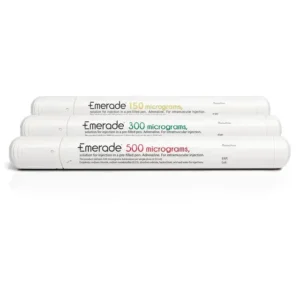
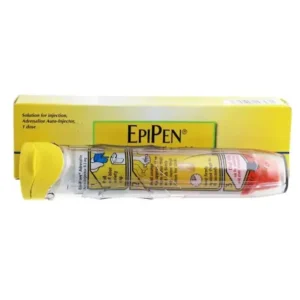
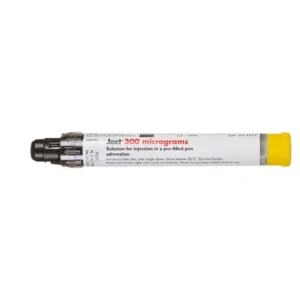
There are three main types of Adrenaline auto-injector, which are used in slightly different ways. These are:
Instructions are also included on the side of each injector if you forget how to use it or someone else needs to give you the injection.
Each device is designed to be used only once – you cannot repeat the procedure with a used auto-injector.
Dummy devices are available for training and practice purposes.
Positioning & Resuscitation
Someone experiencing anaphylaxis should be placed in a comfortable position.
If you have a serious allergy or have experienced anaphylaxis before, it is important to try to prevent future episodes.
The following can help reduce your risk:



The questionnaire consists of simple questions regarding your general health and the treatment requested. The online assessment is straightforward and completely private and confidential.
Once your request has been approved by our prescriber and payment has been received, your treatment is then dispensed, packaged, and posted by our regulated pharmacy partner. Your order will arrive as quickly as the next day depending on your selected delivery option.
You can be confident that your treatment will be 100% genuine, safe, and effective, as we only use medications procured from licensed manufacturers and trusted UK wholesalers.
Rest assured that your treatment will be delivered in plain packaging for complete discretion.
Our fully accredited and qualified UK prescriber then screens your completed medical questionnaire and assesses your suitability for treatment. If the prescriber has any additional questions or concerns, they will contact you directly for clarification.
Provided that the prescriber is satisfied that the treatment is appropriate, the repeat request will be approved, and a supply price provided. In the event that your request is refused, you will be informed of the reason and given referral advice.
Once your order has been approved by our prescriber, your treatment is then dispensed, packaged, and posted by our regulated pharmacy partner. Your order will arrive as quickly as the next day depending on your selected delivery option.
You can be confident that your treatment will be 100% genuine, safe, and effective as we only use medications procured from licensed manufacturers and trusted UK wholesalers.
Rest assured that your treatment will be delivered in plain packaging for complete discretion.
A straightforward medical questionnaire acts as a replacement to the conventional face-to-face appointment. This type of consultation process is quick and should only take around five minutes to complete.
The questionnaire consists of simple questions regarding your general health and the specific condition selected. Questions are easy to understand and similar to those that you would be asked during a GP appointment.
The online assessment is completely private and confidential and is conducted with the same professionalism and safety standards as you would expect from a regular appointment but without the need for an awkward or embarrassing face-to-face consultation.
When the questionnaire has been completed, you can add your chosen treatment to your basket and complete our secure checkout process.
Our fully accredited and qualified UK prescriber then screens your completed medical questionnaire and assesses your suitability for treatment. If the prescriber has any additional questions or concerns, they will contact you directly for clarification.
Provided that the prescriber is satisfied that the treatment is appropriate, the order will be approved, and a free private prescription issued for dispensing. In the event that your order is refused, you will be informed of the reason and given referral advice.
Select the condition that you require treatment for from our extensive list.
Detailed information, guidance, and advice about the selected condition and associated medications are clearly provided on our website.
When you are ready, simply click through to commence the online consultation process.