- Quick, Easy, & Hassle-Free
- UK Based
- GPhC Regulated
- Secure Checkout
- Express Delivery

Quick, Easy, & Hassle-Free
UK Based
GPhC Regulated
Secure Checkout
Express Delivery

No Appointments
No Embarrassment
No Hassle!
No Appointments
No Embarrassment
No Hassle!
Hirsutism is a medical condition characterised by excessive hair growth in women, particularly in areas where men typically grow hair, such as the face, chest, and back. Hirsutism can have significant psychological and emotional impacts on affected individuals, leading to issues such as low self-esteem and anxiety. Treatment options vary and may include lifestyle modifications, hormonal therapies, and various hair removal techniques.
Hirsutism is a medical condition characterised by excessive hair growth in women, particularly in areas where men typically grow hair, such as the face, chest, and back. It is often caused by an imbalance in hormone levels, particularly androgens, which can result from conditions such as polycystic ovary syndrome (PCOS), adrenal disorders, or certain medications.
Hirsutism can have significant psychological and emotional impacts on affected individuals, leading to issues such as low self-esteem and anxiety. Diagnosis typically involves a comprehensive evaluation, including a medical history, physical examination, and hormonal assessments.
Treatment options vary and may include lifestyle modifications, hormonal therapies, and various hair removal techniques, depending on the underlying cause and the severity of the condition. Addressing Hirsutism is essential not only for physical comfort but also for the overall well-being of those affected.
Hirsutism is defined as the excessive growth of thick, dark hair where hair growth in women is usually minimal or absent, such as the face, neck, chest, stomach, lower back, buttocks, or thighs. Normally, hair growth in these regions is very fine, light, and short, making it virtually invisible. However, in women with Hirsutism, the hair is darker, coarser, and thicker.
In addition to excessive hair growth, Hirsutism is often accompanied by acne and other skin problems related to increased oil production. Women with this condition may also notice a deeper voice and an enlarged clitoris.
Hirsutism is a common disorder affecting between 5% and 15% of women of reproductive age. It is more prevalent in certain ethnic groups, particularly women from Mediterranean regions, the Middle East, and South Asia. Additionally, obesity and a family history of Hirsutism are associated with an increased risk of developing the condition.
Excessive hair growth is a subjective and personal condition, with perceptions of what is considered excessive varying from person to person. Attitudes towards Hirsutism also differ widely; some women may not feel the need to remove the hair, while others may find it detrimental to their self-image, leading to low self-esteem, stress, and even depression. It is up to each individual to decide whether or not treatment is necessary.
It is important to discuss any newly occurring Hirsutism with your GP to investigate the underlying cause. If an underlying condition is identified, it can be treated alongside the excessive hair growth, with the goal of managing both issues effectively.
Hirsutism occurs due to increased production or sensitivity to male sex hormones called androgens. This can be the result of an underlying medical condition, or there may be no obvious cause.
The most common cause of Hirsutism is a condition affecting the ovaries called Polycystic Ovary Syndrome (PCOS). It is responsible for up to 70% of cases and can also cause symptoms such as acne, irregular periods, and weight gain.
Other causes of Hirsutism include menopause, the use of anabolic steroids, certain medications (e.g. Glucocorticoids, Sodium Valproate, and Androgenic Progestogens), hormonal conditions such as Cushing’s syndrome and acromegaly, androgen-producing ovarian or adrenal tumours, prolactinoma, insulin resistance, anorexia, and porphyria.
It is important to note that Hirsutism is different to hypertrichosis, which is characterised by increased hair growth in a generalised non-sexual distribution and is unrelated to androgens.
Most people have a fine layer of small, light hairs that cover the body. In Hirsutism, these hairs become noticeably thicker, darker, and coarser. This excessive hair growth most commonly occurs on the face but can also appear on the neck, chest, stomach, back, thighs, buttocks, and genital areas, often following a masculine pattern. This can be distressing for some women, and if this is the case, it is important to seek treatment.
In addition to excessive hair growth, signs of associated virilism (hyperandrogenism) may also be present. They include:
Other abnormalities associated with excessive levels of androgens are cardiovascular disease, lipid imbalance, insulin resistance, and high blood pressure.
When Hirsutism in women is accompanied by other signs of virilism, it may be a manifestation of a more serious underlying disorder causing hyperandrogenism which requires further investigation.
If you have lighter, finer hair on your face or body, it is probably not Hirsutism. Most women experience an increase in this type of hair as they age, especially after menopause.
There is no medical reason which requires the removal of excessive hair if the patient is not concerned about the cosmetic appearance. Excessive hair growth is a subjective and personal condition, with perceptions of what is considered excessive varying from person to person. Attitudes towards Hirsutism also differ widely; some women may not feel the need to remove the hair, while others may find it detrimental to their self-image, leading to low self-esteem, stress, and even depression. It is up to each individual to decide whether or not treatment is necessary.
If you have had Hirsutism clinically diagnosed by your GP and it is idiopathic (of unknown cause) or you are treating the underlying cause(s), you may wish to treat your unwanted facial hair. If you are treating unwanted facial hair yourself, we recommend having a check-up with your GP before starting any treatment to ensure there are no underlying causes, such as PCOS.
There are a number of ways to remove, reduce, or disguise excess facial hair. However, since these treatments are considered cosmetic, many are not available through the NHS.
Hair Removal
If your Hirsutism is mild, you may only require traditional hair removal techniques with no medical intervention. Methods such as shaving, waxing, plucking, threading, and bleaching can all help minimise the appearance of hair; however, each comes with its own drawbacks, including maintenance, discomfort, and regrowth appearance. There are also longer-term solutions, such as electrolysis and laser hair removal, which can both be effective but may be painful, risky, and costly. The suitability of each treatment depends on the individual.
Shaving – simple, quick, and safe, shaving regularly can help you stay on top of excessive hair growth. This may mean shaving as often as once daily. If doing this, it’s important to consider good skincare products to reduce skin irritation. While this is an inexpensive and quick fix, it can also be inconvenient, cause irritation, and leave rough stubble.
Bleaching – a simple method which can be used in conjunction with other techniques. Bleaching effectively lightens the colour of your hair, making it less noticeable. This can mean you have more time between shaving or waxing, before having to repeat. Bleaching works best with pale skin. It’s important to use products which are approved in the UK, and patch test before use. This can help you avoid allergic reactions or potential skin irritation/discolouration.
Waxing, plucking or threading – can help to reduce hair regrowth, however, can be painful and cause inflamed hair follicles. Waxing is more effective for removing large patches of hair than shaving, and will also have longer-lasting effects. While shaving removes the visible hair, waxing can pull the hair up from the root, meaning it takes longer to regrow. Unfortunately, it can also be painful and can cause temporary skin irritation.
Epilation – similar to waxing, epilation removes the hair by the roots, and so can have longer-lasting results. Unlike waxing, however, an epilator device essentially plucks away hair from the roots, as you move the device over your body. Skin exfoliation is recommended before epilation, to help prevent ingrown hairs.
Electrolysis – can permanently remove hair; however, it may be time-consuming, expensive, and can potentially cause scarring or changes in skin colour. During this procedure, a practitioner inserts a thin needle into the follicles of the unwanted hair, releasing small electrical charges that destroy the hair roots. While this method can be painful, it often yields long-lasting results, especially with multiple sessions.
Laser hair removal – can provide permanent hair reduction, but it may be time-consuming and expensive. This method is most effective for women with pale skin and dark hair. Achieving optimal results typically requires three to four sessions, followed by maintenance treatments. Additionally, there are risks associated with laser treatment, including scarring and skin discoloration.
Laser and electrolysis treatments should always be carried out by a trained and registered professional.
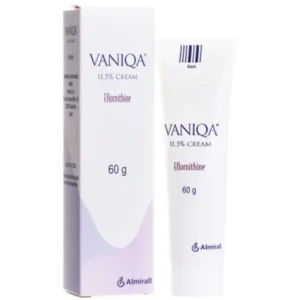
Vaniqa (Eflornithine) Cream
Vaniqa Cream is a topical hair growth retardant that is clinically proven to slow excessive facial hair growth in up to 70% of women, with little to no risk of side effects and an easy application. Vaniqa works by inhibiting an enzyme called ornithine decarboxylase, which is responsible for hair growth in the follicles.
Vaniqa is applied to areas of the face where there is excessive hair growth. It is equally as effective in all skin types and shades. Vaniqa is not a hair removal cream, it helps to slow the growth of hair, as well as making it shorter, finer, lighter, and ultimately less visible.
Vaniqa can be used alongside other treatments such as hormone tablets or other forms of hair removal such as plucking, waxing, threading, or laser hair removal. Vaniqa should be used regularly; if it is discontinued normal hair growth will resume within 8 weeks.
Vaniqa Cream must be used indefinitely to prevent regrowth. Vaniqa is only licensed for use on facial hair and continuous use for eight weeks is required before any benefit is visible. Vaniqa Cream should not be used in pregnant or breastfeeding women or those younger than 18. It should be stopped in the absence of any improvement after four months.
Oral Contraceptives
If you suffer with moderate to severe Hirsutism that requires medical treatment, your GP may prescribe you certain oral contraceptives to treat the condition. These will only be effective in pre-menopausal women. Oral contraceptive pills such as Dianette (Co-cyprindiol) can be prescribed for their anti-androgen effects. By blocking the effects of male hormones, they can help to treat hormone-related Hirsutism. Oral contraceptives can be effective at treating excess facial hair in women, however, they can take up to 6 months to be effective so you may wish to opt for a cream, such as Vaniqa, instead (or as well).
Lifestyle Factors
Excess weight and obesity have been linked with increased androgen production and Hirsutism. Losing weight to get to a healthy BMI can help to reduce the production of androgens and prevent excessive hair growth in some women. Increasing your intake of Vitamin B and protein, and reducing your intake of carbohydrates may also improve symptoms.
It is important to discuss newly occurring Hirsutism with your GP to investigate the cause. If there is an underlying cause such as PCOS, this can be treated alongside your excess hair growth with the aim to control both conditions.
If Hirsutism is causing you to experience psychological problems such as a loss of confidence, social embarrassment, or even depression, it is important to consult your GP for treatment.
If prescribed treatment has not helped after 6 months, your GP may refer you to a specialist. They may recommend other medicines to control your hormone levels.
You should always consult your GP if you develop any of the following symptoms:



The questionnaire consists of simple questions regarding your general health and the treatment requested. The online assessment is straightforward and completely private and confidential.
Once your request has been approved by our prescriber and payment has been received, your treatment is then dispensed, packaged, and posted by our regulated pharmacy partner. Your order will arrive as quickly as the next day depending on your selected delivery option.
You can be confident that your treatment will be 100% genuine, safe, and effective, as we only use medications procured from licensed manufacturers and trusted UK wholesalers.
Rest assured that your treatment will be delivered in plain packaging for complete discretion.
Our fully accredited and qualified UK prescriber then screens your completed medical questionnaire and assesses your suitability for treatment. If the prescriber has any additional questions or concerns, they will contact you directly for clarification.
Provided that the prescriber is satisfied that the treatment is appropriate, the repeat request will be approved, and a supply price provided. In the event that your request is refused, you will be informed of the reason and given referral advice.
Once your order has been approved by our prescriber, your treatment is then dispensed, packaged, and posted by our regulated pharmacy partner. Your order will arrive as quickly as the next day depending on your selected delivery option.
You can be confident that your treatment will be 100% genuine, safe, and effective as we only use medications procured from licensed manufacturers and trusted UK wholesalers.
Rest assured that your treatment will be delivered in plain packaging for complete discretion.
A straightforward medical questionnaire acts as a replacement to the conventional face-to-face appointment. This type of consultation process is quick and should only take around five minutes to complete.
The questionnaire consists of simple questions regarding your general health and the specific condition selected. Questions are easy to understand and similar to those that you would be asked during a GP appointment.
The online assessment is completely private and confidential and is conducted with the same professionalism and safety standards as you would expect from a regular appointment but without the need for an awkward or embarrassing face-to-face consultation.
When the questionnaire has been completed, you can add your chosen treatment to your basket and complete our secure checkout process.
Our fully accredited and qualified UK prescriber then screens your completed medical questionnaire and assesses your suitability for treatment. If the prescriber has any additional questions or concerns, they will contact you directly for clarification.
Provided that the prescriber is satisfied that the treatment is appropriate, the order will be approved, and a free private prescription issued for dispensing. In the event that your order is refused, you will be informed of the reason and given referral advice.
Select the condition that you require treatment for from our extensive list.
Detailed information, guidance, and advice about the selected condition and associated medications are clearly provided on our website.
When you are ready, simply click through to commence the online consultation process.