- Quick, Easy, & Hassle-Free
- UK Based
- GPhC Regulated
- Secure Checkout
- Express Delivery

Quick, Easy, & Hassle-Free
UK Based
GPhC Regulated
Secure Checkout
Express Delivery

No Appointments
No Embarrassment
No Hassle!
No Appointments
No Embarrassment
No Hassle!
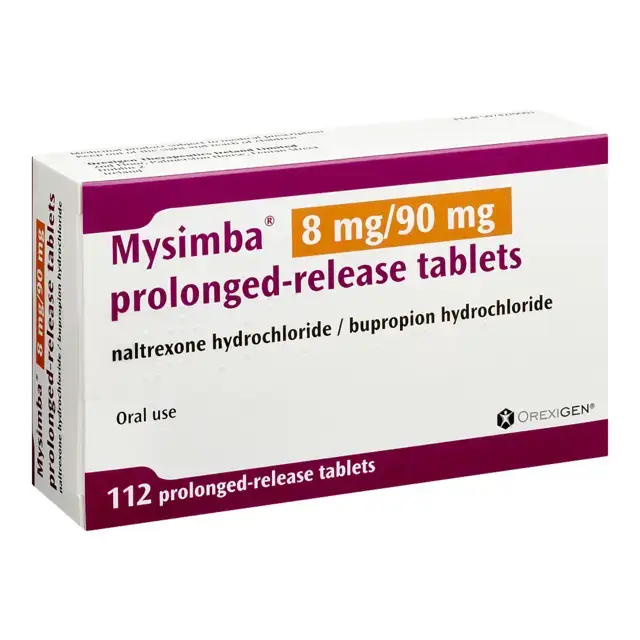
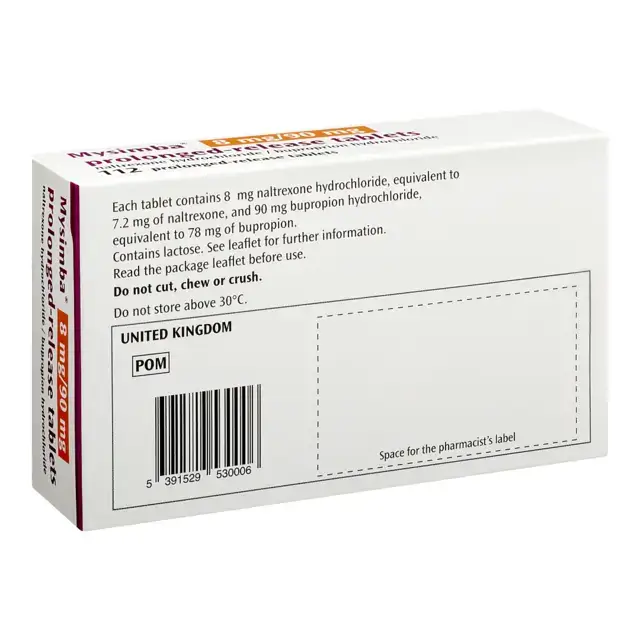
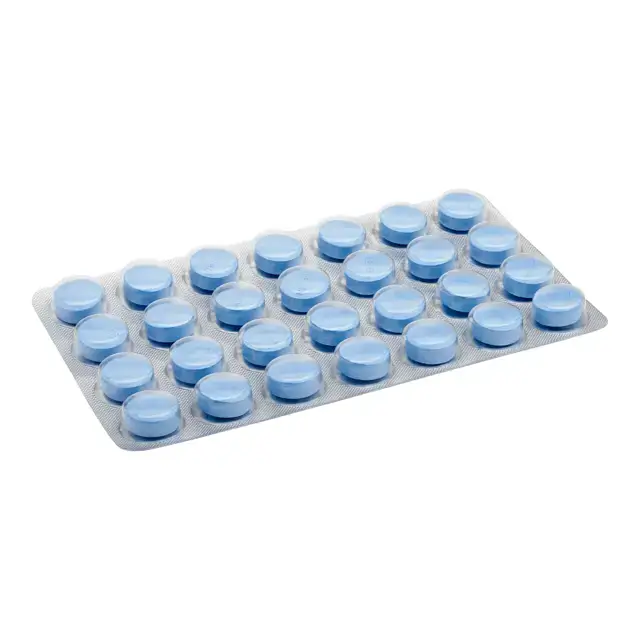
*Image for Illustrative purposes only. The packaging/brand supplied may vary.
£124.95
Includes FREE Private Prescription.
* This treatment requires an online consultation for review by our prescribing team. The decision to supply the specific treatment and quantity requested will be based on whether our medical team are satisfied that it will be safe, appropriate, and effective. Please note that you must be 18 years of age or older to request this treatment.
Place your order by 1pm to receive delivery as soon as the next day!
✔ Effective Weight Loss treatment
✔ Suppresses appetite
✔ Increases energy expenditure
✔ Contains Naltrexone and Bupropion
✔ Slow-release formulation
Mysimba is a weight loss treatment that is used to help people who are obese or overweight to manage their weight.
Mysimba suppresses appetite by targeting specific areas of the brain responsible for regulating food intake and energy use. This helps you to feel fuller with smaller portions, which reduces your overall food intake and supports weight loss.
Mysimba won’t cause weight loss on its own and only works effectively alongside a reduced calorie diet and increased physical activity levels.
Mysimba is licensed for use in adults aged 18-75 with a Body Mass Index (BMI) of 30 or higher, or in individuals with a BMI of 27 or more who also have at least one weight-related condition (e.g. controlled high blood pressure, diabetes, high cholesterol…).
Mysimba contains two active ingredients: Naltrexone and Bupropion – both of which help to support weight loss when taken in combination. Scientists do not fully understand the exact mechanism behind Mysimba, but its active ingredients influence the brain’s regions that control appetite and energy regulation. This supports weight loss in two key ways: by reducing appetite, making it easier to maintain a diet, and by increasing energy expenditure, helping to accelerate the weight loss process.
Before taking Mysimba, you should read the manufacturer’s printed Patient Information Leaflet (PIL) from inside the pack. It will give you more information about Mysimba and provide you with a full list of the side effects which you may experience from taking it.
The initial dose is usually one tablet (8mg Naltrexone / 90mg Bupropion) once a day in the morning. The dose will be gradually increased as follows:
The maximum recommended daily dose of Mysimba is two tablets taken twice a day.
Tablets should be swallowed whole with water and preferably be taken with food. Do not cut, chew, or crush the tablets.
After 16 weeks and each year after your treatment initiation, your prescriber will evaluate whether you should continue to take Mysimba.
If you take more Mysimba than you should, you may be more likely to have a fit or other side effects similar to those described below. Do not delay, contact your doctor or your nearest hospital emergency department immediately.
If you forget to take Mysimba, skip the missed dose and take your next dose at the next usual time. Do not take a double dose to make up for a forgotten dose.
Mysimba starts working immediately, but it can take a few weeks to notice its full effect. Do not stop taking Mysimba without talking to your prescriber first.
Along with their useful effects, most medicines can cause unwanted side effects although not everyone experiences them. The unwanted effects often improve as your body adjusts to the new medicine, but please speak with your doctor or pharmacist if they continue or become troublesome. You will find a full list of possible side effects in the Patient Information Leaflet (PIL) supplied with your medicine.
Stop taking Mysimba and seek medical help immediately if you experience any of the following serious side effects:
Very common side effects (may affect more than 1 in 10 people)
Common side effects (may affect up to 1 in 10 people)
Please tell the prescriber if you are taking, have recently taken, or might take any other medicines, including medicines obtained without a prescription. This is because Mysimba can affect the way some medicines work, and some medicines can have an effect on Mysimba. In the event of a medical emergency, you should tell your doctor, pharmacist, or nurse that you have taken Mysimba and when you did. Do not take Mysimba with other medicines unless your doctor tells you that you can.
Do not take Mysimba with:
Tell your doctor or pharmacist if you are taking any of the following medicines:
* Medicines that may, when used alone or in combination with Naltrexone/Bupropion, increase the risk of fits such as:
* Medicines to treat depression (such as Amitriptyline, Imipramine, Venlafaxine, Paroxetine, Fluoxetine, Citalopram, Escitalopram) or other mental health problems (such as Risperidone, Haloperidol). Mysimba may interact with some medicines used for the treatment of depression and you may experience a so-called serotonin syndrome. Symptoms include mental status changes (e.g. agitation, hallucinations, coma), and other effects, such as a body temperature above 38°C, increase in heart rate, unstable blood pressure, and exaggeration of reflexes, muscular rigidity, lack of coordination, and/or gastrointestinal symptoms (e.g. nausea, vomiting, diarrhoea)
* Some medicines used to treat high blood pressure (Beta-blockers such as Metoprolol, and Clonidine, a centrally acting antihypertensive)
* Some medicines used to treat irregular heart rhythm (such as Propafenone, Flecainide)
* Some medicines used to treat cancer (such as Cyclophosphamide, Ifosfamide, Tamoxifen)
* Some medicines for Parkinson’s disease (such as Levodopa, Amantadine or Orphenadrine)
* Clopidogrel or Ticlopidine, mainly used in the treatment of heart disease or stroke
* Medicines used in the treatment of HIV infection and AIDS, such as Efavirenz and Ritonavir
* Medicines used to treat epilepsy such as Valproate, Carbamazepine, Phenytoin, or Phenobarbital
* Digoxin – Mysimba may make Digoxin less effective when taken at the same time: your doctor may consider adjusting the dose of Digoxin
Do not take Mysimba:
Warnings & Precautions
Talk to your doctor or pharmacist before taking Mysimba:
Fits (seizures)
Mysimba has been shown to cause fits (seizures) in up to 1 in 1,000 patients. You should inform your doctor before taking this medicine:
If you have a fit (seizure), you should stop taking Mysimba and consult your doctor immediately
Hypersensitivity reactions
You should stop taking Mysimba immediately and consult your doctor if you are experiencing any symptoms of an allergic reaction such as swelling of the throat, tongue, lips, or face, difficulty swallowing or breathing, dizziness, fever, rash, pain in the joints or in the muscles, itching or hives after taking this medicine.
Serious skin reactions, including Stevens-Johnson syndrome and acute generalised exanthematous pustulosis (AGEP), have been reported in association with Mysimba treatment. Stop using Mysimba and seek medical attention immediately if you notice any of the symptoms related to these serious skin reactions.
Mysimba with alcohol
Excessive use of alcohol while being treated with Mysimba might increase the risk for fits (seizures), mental disorder events, or might reduce alcohol tolerance. Your doctor may suggest you do not drink alcohol while you are taking Mysimba, or try to drink as little as possible. If you do drink a lot now, do not just stop suddenly, because that may put you at risk of having a fit.
Pregnancy, Breastfeeding, & Fertility
Mysimba should not be used during pregnancy, or in women currently planning to become pregnant, or while breastfeeding. If you are pregnant or breastfeeding, think you may be pregnant or are planning to have a baby, ask your doctor or pharmacist for advice before taking this medicine.
Driving and using machinery
Mysimba might make you feel dizzy and sleepy which may weaken your ability to concentrate and react. Do not drive, use any tools or machines, or perform dangerous activities until you know how this medicine affects you. If you experience fainting, muscle weakness or fits during treatment, do not drive or use machines.
You must be logged in to submit a review.


The questionnaire consists of simple questions regarding your general health and the treatment requested. The online assessment is straightforward and completely private and confidential.
Once your request has been approved by our prescriber and payment has been received, your treatment is then dispensed, packaged, and posted by our regulated pharmacy partner. Your order will arrive as quickly as the next day depending on your selected delivery option.
You can be confident that your treatment will be 100% genuine, safe, and effective, as we only use medications procured from licensed manufacturers and trusted UK wholesalers.
Rest assured that your treatment will be delivered in plain packaging for complete discretion.
Our fully accredited and qualified UK prescriber then screens your completed medical questionnaire and assesses your suitability for treatment. If the prescriber has any additional questions or concerns, they will contact you directly for clarification.
Provided that the prescriber is satisfied that the treatment is appropriate, the repeat request will be approved, and a supply price provided. In the event that your request is refused, you will be informed of the reason and given referral advice.
Once your order has been approved by our prescriber, your treatment is then dispensed, packaged, and posted by our regulated pharmacy partner. Your order will arrive as quickly as the next day depending on your selected delivery option.
You can be confident that your treatment will be 100% genuine, safe, and effective as we only use medications procured from licensed manufacturers and trusted UK wholesalers.
Rest assured that your treatment will be delivered in plain packaging for complete discretion.
A straightforward medical questionnaire acts as a replacement to the conventional face-to-face appointment. This type of consultation process is quick and should only take around five minutes to complete.
The questionnaire consists of simple questions regarding your general health and the specific condition selected. Questions are easy to understand and similar to those that you would be asked during a GP appointment.
The online assessment is completely private and confidential and is conducted with the same professionalism and safety standards as you would expect from a regular appointment but without the need for an awkward or embarrassing face-to-face consultation.
When the questionnaire has been completed, you can add your chosen treatment to your basket and complete our secure checkout process.
Our fully accredited and qualified UK prescriber then screens your completed medical questionnaire and assesses your suitability for treatment. If the prescriber has any additional questions or concerns, they will contact you directly for clarification.
Provided that the prescriber is satisfied that the treatment is appropriate, the order will be approved, and a free private prescription issued for dispensing. In the event that your order is refused, you will be informed of the reason and given referral advice.
Select the condition that you require treatment for from our extensive list.
Detailed information, guidance, and advice about the selected condition and associated medications are clearly provided on our website.
When you are ready, simply click through to commence the online consultation process.